It is a difficult thing being a fan. To be so invested in a team that every mistake is total heartbreak and every win is expected, never celebrated.
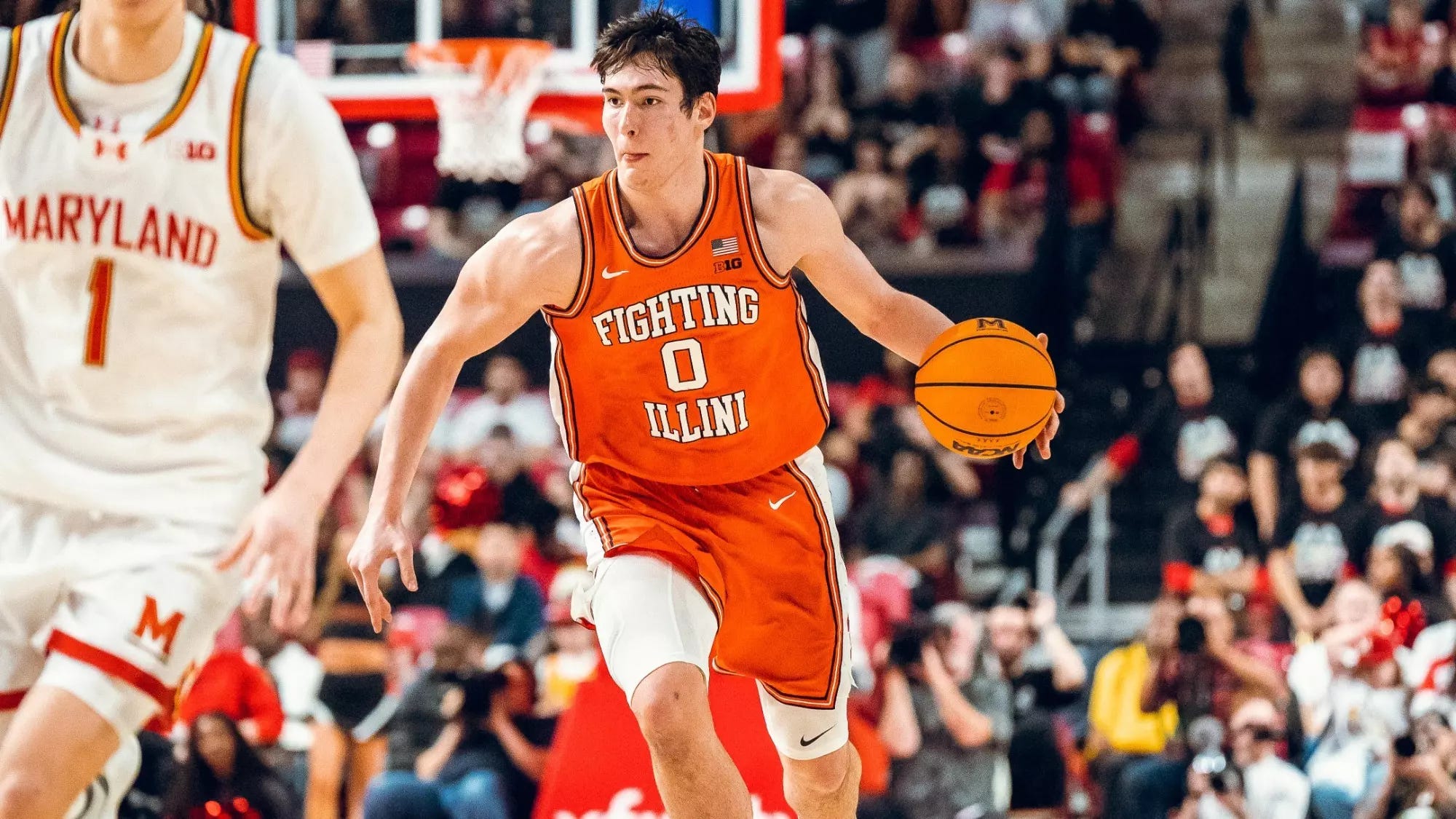
I’m watching the Illinois-Maryland game at home with my wife a few days ago. The team did something dumb. I slap my knee a bunch of times and say, “We can’t lose to this terrible Maryland team!” It probably looked like a tantrum. My wife hates it when I do this kind of thing. In the moment, I don’t know if I’m in the wrong by getting excited or if she’s overreacting. In any case, she was like, “I can’t watch games with you.”
The honest answer is probably that I’m not wrong for getting excited about the team. I think that’s part of loving sports. However, the way it comes out consistently makes the person next to me miserable.
That’s no good.
I’m not wrong for being a passionate fan, but she’s also not overreacting. She just reached her limit with something that’s been unpleasant for her over time because this isn’t just a one-time thing with me.
Illinois won, and, of course, my tiny tantrum had zero effect on the game. Also, it’s good to remember that there’s no “we” here when I say “We can’t lose.” I’d also like to apologize to any Maryland fans. You have a good coach and a good program. Next year should be much better.
In any case, I need to stop being so passionate that it comes out so negatively. The bottom line is that there’s probably a healthier version of fandom available to me. That’s easy to say and harder to do.
Why?
Because the real reason is that it’s not really about sports at all. It’s about emotional maturity. And that is something a lot of us are still very much in the middle of figuring out. Including me.
So, what actually is emotional maturity? It's usually thrown around as an accusation. No one says something like, “Boy, he’s not emotionally mature.” They say, “He’s such a baby,” or “He can’t control himself,” and “He doesn’t think before he speaks.”
Emotional maturity is the ability to recognize what you’re feeling, understand where it’s coming from, and choose how to respond rather than simply react. Notice that word: choose. It’s the critical one. The feeling itself isn’t the issue. Having feelings is not the problem either. Emotional maturity addresses the gap between feeling and what you do next.
A mature emotional response doesn’t mean you don’t feel things deeply. It doesn’t mean you become some kind of serene, unflappable presence who watches sports with the detachment of a monk. It means you feel the frustration and still decide how big a room to give it.
Basically, it’s the difference between being emotionally reactive and emotionally responsive. Reactive is my knee-slap tantrum. Responsive is the exhale, the pause, the “come on” muttered quietly to yourself before you move on. Same feeling underneath. Very different output.
The mechanics of emotional maturity are more practical than they sound.
It starts with awareness and noticing what’s happening inside you in real time. For me, I find that to be genuinely difficult, especially when the stimulus is fast, like a bad turnover with two minutes left in a close game. The emotional brain moves quicker than the thinking brain.
The internal mechanism that bridges that gap must be an internal pause button. There’s a fraction of a second between stimulus and response. That’s when the pause button is pushed. It can be a breath. A beat. Even holding a token like a calming stone can be the trigger. That tiny interruption changes everything. It doesn’t eliminate the frustration. It just gives you back authorship over what happens next.
Emotionally mature people don’t blame their feelings on someone else. They have control.
In a relationship, emotional maturity is incredibly important.
Every relationship has what you might call an emotional weather pattern. It’s the general climate that forms between two people over time. Individual moments contribute to that pattern, small deposits and withdrawals made constantly, most of them barely noticed. The knee-slap is a withdrawal. Not a catastrophic one on its own, but it can compound. My wife didn’t suddenly reach her limit during the Illinois game. She reached it because my reaction was the latest in a long series of games where the couch became a stressful place to be. The “accumulated bad weather” is how emotional immaturity damages relationships.
Emotional maturity, practiced consistently, does the opposite. It tells my partner that she’s safe next to me. I have my own feelings, but I am not going to make them your problem. That is a gift in a long-term relationship. It creates the kind of ease and trust that is genuinely hard to manufacture any other way.
The good news is that emotional maturity is not fixed. It’s a skill. It gets built.
The most effective starting point is simply naming what you’re feeling, in the moment, out loud or internally. Not “this is bad” or “this is frustrating” but the actual emotion: I am anxious. I am scared this team is going to break my heart again. Whatever it is. Naming it engages the thinking side, which literally calms the emotional side.
Beyond that, reflection matters. After the moment has passed, ask yourself the question: Where did that come from? The goal is to understand the pattern well enough to interrupt it next time.
I think emotional maturity might be one of the most consequential things a person can work on. I’m well aware of how an emotional outburst affects others around me. I’m good in most areas and poor in others. I’m not perfect and no one really is.
There are people I admire who share a certain quality. They have opinions. They have preferences. They have frustrations, fears, and concerns. But when those feelings arrive, they seem to have a settled, adult relationship with them. They feel things without being at the mercy of them. That’s what I want. That’s the thing worth chasing.
Illinois won the game. I sat on the couch with my knee radiating frustration, and my wife was out of the room, deciding she’d had enough.
She wasn’t wrong. I wasn’t wrong either, not for being a fan. But being a fan does not excuse having emotional outbursts.
I’m going to work on the pause. I’m going to try using a worry stone or another token to help regulate my emotions. I’m going to remember that the person next to me on the couch did not sign up to absorb the emotional outbursts of her crazy husband.
And the next time Illinois does something dumb, which will be soon, because... sports. I’m going to try the long exhale, rolling the totem in my hand, and the quiet “come on.”
This isn’t easy, but it matters. More than the score does.
Be seeing you.
The Kid Nobody Wanted
When Keaton Wagler committed to Illinois, he was the 150th-ranked prospect in the country. Two high-major offers. That was it. Most programs didn’t give him a second look. Tyler Underwood saw something the rest of college basketball missed and then showed his Dad.
Keaton Wagler just won Big Ten Freshman of the Year.
The 6-foot-6 guard from Shawnee, Kansas, averaged 17.9 points, 4.9 rebounds, and 4.3 assists while shooting 41 percent from three. Remember when he scored 46 at Purdue? He broke the Illinois freshman scoring record with 555 points on the season. He was named First-Team All-Big Ten by both coaches and media. He is one of only two freshmen in the entire country averaging at least 18 points, five rebounds, and four assists. The other guy is Duke’s Cameron Boozer, one of the most recruited players in recent memory.
Wagler is only the fifth Illini since 1986 to win the conference’s freshman honor. He joins Corey Bradford, Brian Cook, D.J. Richardson, and Kofi Cockburn.
That is a very short, very good list.
I look forward to seeing his jersey in the rafters next year.
They’re Doing Something with Firefly
I don’t want to get my hopes up. I am absolutely getting my hopes up.
Nathan Fillion has been posting a series of amusing videos recruiting his old Firefly castmates, Gina Torres, Morena Baccarin, Summer Glau, Jewel Staite, Sean Maher, Adam Baldwin, for… something. One by one. There’s a countdown. The announcement is due tomorrow.
He’s specifically ruled out convention appearances, podcasts, and crossovers.
Firefly ran for one season in 2002. Eleven of its fourteen produced episodes aired before Fox cancelled it. It developed a cult following that has refused to let go for over twenty years. There was a movie in 2005. There have been comics. The cast has spent two decades doing convention panels together.
Whatever this is, it looks like the whole crew is in.
I will be genuinely shocked if it’s a rebooted series or another movie, mostly because many of these actors are committed to other shows.
What do I think? It’s going to be something animated.
We Lost Dan Simmons
Dan Simmons died on February 21st. He was 77.
He wrote lots of books, but the one he’ll be best remembered for is Hyperion.
If you haven’t read Hyperion, I want to be careful not to overexplain it, because the structure is part of the experience. The short version is that the novel is built like Chaucer’s Canterbury Tales. It features a group of pilgrims traveling toward something terrible, each telling their story along the way. It won the Hugo Award in 1989. It’s simply one of the best science fiction books of the 20th century. The Fall of Hyperion completes their story.
The author might have gone off the deep end in the last few years of his life. Simmons got driven crazy by watching too much Fox News after September 11th. Seriously. However, if you can separate the art from the artist, I highly recommend reading Hyperion (and maybe Carrion Comfort and The Terror, too).
Perspective is Everything
A week ago, something pretty remarkable happened in the golf world that, if you’re not a die-hard golf fan, you almost certainly missed.
Shane Lowry, a former major winner, led the Cognizant Classic by three strokes with three holes to play on Sunday. And then, on back-to-back holes, he hit shots into the water. He went from being a near-certain tournament winner to finishing second.
A few days later, I was listening to “The Tony Kornheiser Podcast,” when Steve Sands, a golf commentator, told this story about chatting with Lowry after the tournament:
He told me a cute story on Tuesday. He said, “We’re headed home, we’re getting to the house, and everybody realizes how upset Dad is and how upset I am. Nobody’s saying anything, and my 9-year-old daughter looks at me and says, ‘Daddy, what’s wrong with second?’”
When you spend enough time inside your own work, everything can seem overwhelming and every detail precious. That’s usually the moment you need an outside voice who can step back and ask the simplest question in the room: Why does this actually matter?
Because when you’re too close to the thing, perspective disappears. An outside set of eyes can reset the whole picture. Sometimes that’s all it takes.
Which brings me back to Shane Lowry. Yes, it was a brutal way to lose a tournament. No golfer dreams about finishing second. But second place still paid $726,400.
Not much wrong with second place.