The Zone is Not a Feeling
Why ABS should be used for every pitch

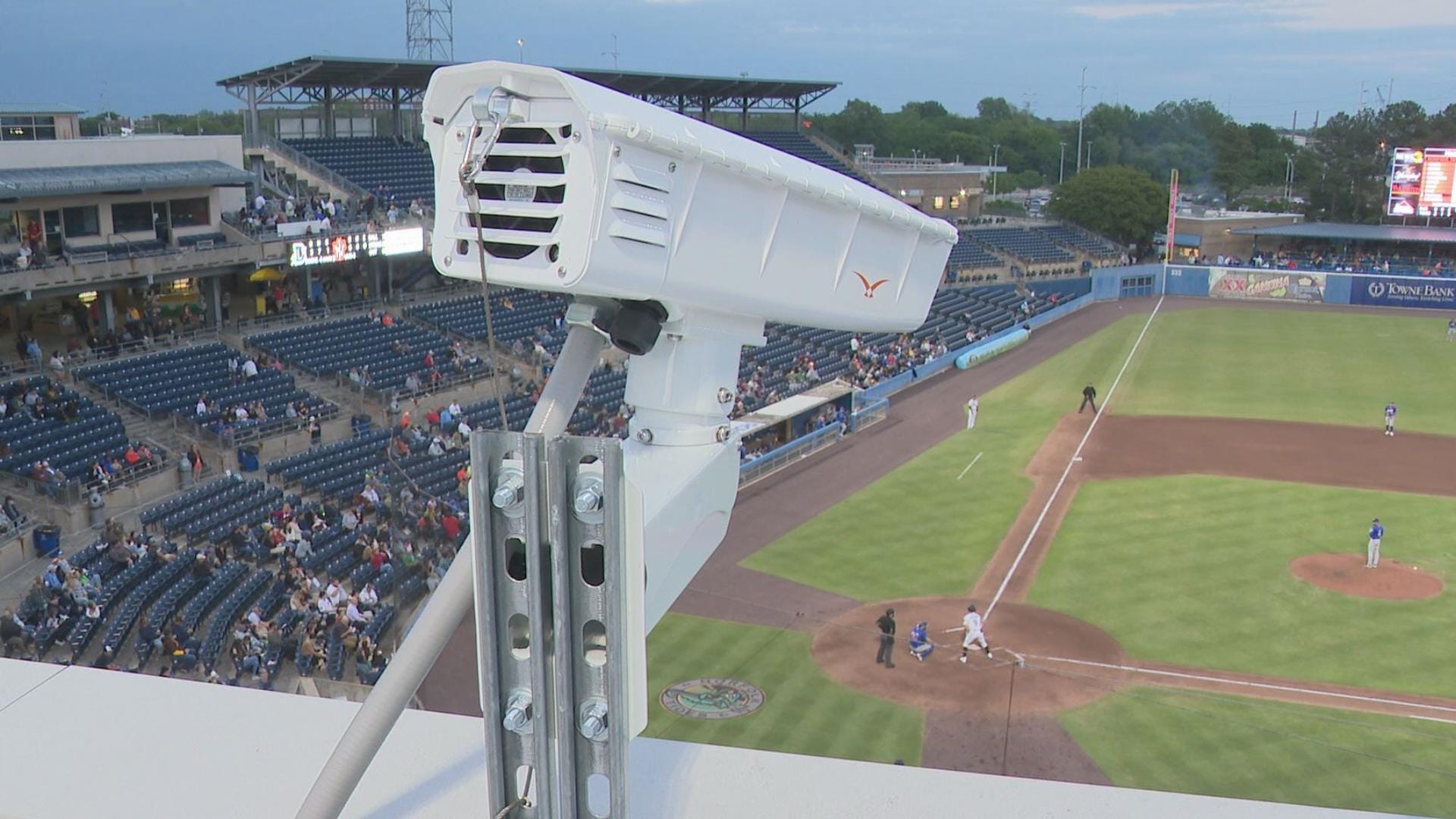
A Saturday night in Cincinnati. Sixth inning. Eugenio Suárez stepped in against the Red Sox with C.B. Bucknor behind the plate. Strike three called. Suárez tapped his helmet. The screen showed the pitch missing the zone. Ball. Next pitch, another strike three called. Another tap. Another miss. Suárez had challenged his way out of two consecutive strikeouts on back-to-back pitches, and the stadium lost its mind.
John Sadak on the Reds broadcast, delighted: “The loudest cheers of the game, the Reds have hit two homers, come on back-to-back challenges.”
Cheers for a correction. Cheers because an umpire just got publicly told he was wrong. Twice. In a row.
This is Major League Baseball in 2026.
A few weeks into the season, the ABS challenge system is working. Each team gets two challenges. The batter, pitcher, or catcher taps his cap. A graphic plays on the videoboard. Seconds later, the answer appears. Fifty-three percent of the time in spring training (1,800 challenges), the umpire’s call got overturned. More than half the time a player felt strongly enough to burn a challenge, he was right and the ump was wrong.
I’ve watched this unfold off and on for the first few weeks of the season and I keep arriving at the same question. If the technology is the final arbiter of balls and strikes and can make the call in real time, what are we even doing?
Here’s the argument for the status quo. MLB tested full ABS in the minors and found a clear preference among fans, players, and managers for the challenge system over the full robot-ump version. People want to preserve some human element. Pitch framing is a real craft. Some catchers have built careers on it. Going full robot would wipe that out overnight.
I hear it. I don’t care.
The human-element argument meant something when the alternative was nothing. When there was no Hawk-Eye, no 5G network, no animated zone on the scoreboard or on TV. In 1955, a bad strike call was just part of the game. You griped about it, the announcer chuckled, and the game moved on. Nobody knew for sure, so everyone agreed to pretend the umpire did.
We don’t need to pretend anymore. We have the exact pitch location. We have it in real time. We’re putting it on the board every single time a player asks. The league has quietly admitted, by literally building and using the system, that the human-element argument is over. Every overturned call is the league saying out loud, we had this wrong and here’s the proof.
The challenge system for balls and strikes is dumb. MLB doesn’t need it. The correct answer is there with every pitch.
I don’t get the current process. So managers only get two challenges? Why? We’ve decided that two incorrect calls are worth fixing and the rest are fine. What? A hitter gets rung up on a pitch four inches outside in the third inning, his team is out of challenges, too bad. Sit down. The zone was wrong, but the zone is also whatever C.B. Bucknor, currently the worst umpire in the major leagues, feels like today. That’s not how any other job works.
To be fair, most umpires are fine. Most of them are good. But the system we’ve built makes every one of them look worse than they are, because now we see the misses. Every challenge that gets overturned is a little public shaming on a forty-foot screen. Kevin Brown, calling Orioles-Twins on Sunday after Ryan Helsley successfully challenged a ball-four call into a strikeout, yelled “He’s arguing with the robots! You can’t defeat the robots!” when Derek Shelton got tossed for protesting. It was funny. It was also a perfect summary.
So, here’s where I land. Take balls and strikes away from the plate umpire. Give them to ABS. Every pitch. Let the umpire stand there and do the rest of the job, which is plenty. Plays at the plate are his. Checking a swing with the crew chief on a tricky appeal is his. Running the game, keeping pace, handling the weird stuff, all him. That’s real work. That’s the part the robots can’t do.
The pitch framing argument is the one I take most seriously. It’s a real skill. Catchers like Austin Hedges and Sean Murphy have spent their whole careers learning to steal strikes. Taking that away takes something real away from the game. I get it. But we’re already taking it away, two pitches at a time, on the catcher’s own challenge. Let it go.
This isn’t anti-umpire. It’s the opposite. Stop asking them to be the one thing they can’t be, which is perfect on something that can actually be measured. Leave them the judgment calls. A tag at second. A trap in the gap. Catcher’s interference. Whether a runner went around on a full-count check swing with the game on the line. Those calls need a person. Balls and strikes don’t. Especially now with ABS, balls and strikes just don’t need the human element.
Baseball has always been a game that loved its traditions until it didn’t. The mound moved. The DH arrived for both leagues. The pitch clock showed up and, shockingly, the game didn’t devolve into chaos. This one’s easier than those. The technology already exists. The league already trusts it.
The only thing left is to stop asking a guy in a chest protector to squint at a 97-mph cutter and guess.
Be seeing you.
First Light
When you watch the official title sequence for 007 First Light, you might be fooled into thinking there’s a new Bond movie coming.
It’s not a movie, but close enough.
The video game features the original song “First Light,” written and composed by Lana Del Rey and David Arnold. It’s got the slow strings and the punchy horns, and it slides a bit of the old Monty Norman theme into the end of the chorus. I think the song is a fantastic addition to the Bond soundscape. Not better than Adele’s “Skyfall,” but way better than “No Time to Die” by Billie Eilish.
Watch the title sequence again. It’s silhouettes and explosions and abstract smoke, the choreography and visuals someone figured out in 1962 and nobody has improved on since. Perfection.
The Onion Owns Infowars
After 18 months of court fights, the deal is done. The Onion has acquired Infowars. Alex Jones can cry all he wants.
Obviously, satire and comedy won’t fix what Jones did. Nothing can. But watching the machinery that tormented the Sandy Hook families get repurposed as a joke against itself, with a judge’s approval and the families’ blessing, is maybe the closest thing to real justice we’re going to see this year.
Stuck in a Time Loop (or is he?)
At least, that’s what he thinks. His life is mundane enough that it takes him a while to notice the days repeating. So he tells Elise. She doesn’t believe him, but she helps him anyway. With her encouragement, he finds a way out.
That’s the surface.
Watch it again and the loop starts to come apart. I’m not convinced it was ever a loop. Clues are planted early and they aren’t obvious. You’ll finish the second viewing holding a theory you didn’t have after the first. You might not be any more certain.
I love these kinds of videos.
Truvia Vanilla Liquid Sweetener
I need to tell you about Truvia Vanilla Liquid Sweetener.
I say “need” because this is the kind of product you find and then it just becomes a part of how you do things. You put a single squeeze in a cup of coffee and it tastes like perfect vanilla coffee, not the chemical wince you brace for with most of these kinds of sweeteners. This one tastes like vanilla. Not vanilla-flavored-something. Vanilla.
Additionally, I have added it to an open can of Coke Zero and enjoyed a Vanilla Coke Zero. I’m open to other uses.
A quick disclaimer: I’m not getting paid for this. If Truvia wants to send me a case, I will accept it in the true spirit of journalism.