My first Fourth of July, I was a few days old, asleep in the bleachers behind a backstop while my Dad played ball. I don’t remember it. My Mom does. She says that’s where I was, swaddled in a blanket on the third-base line, the summer I was born.
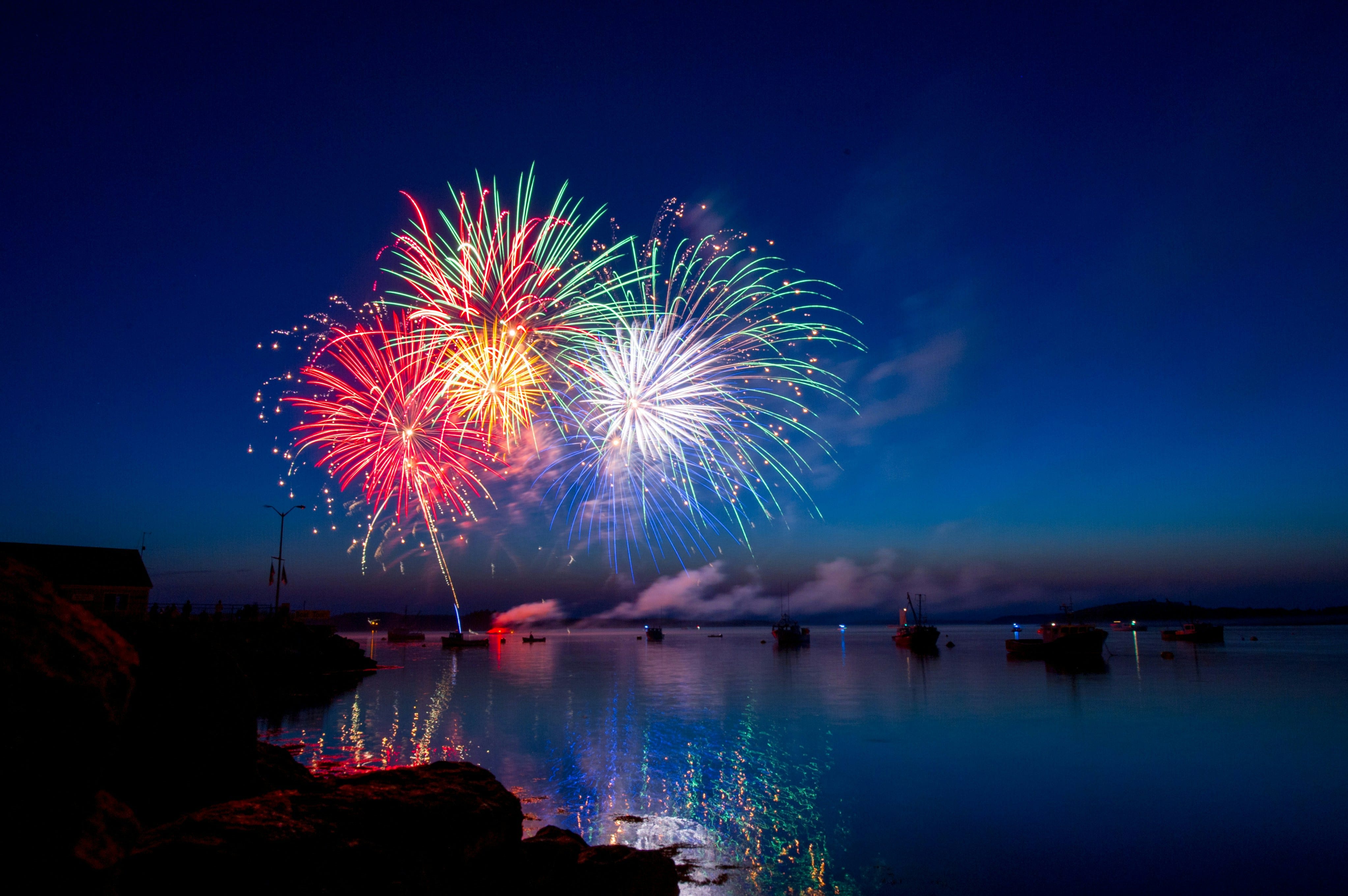
For years after that, the Fourth meant baseball. Town-league games in the afternoon, an all-star game when the schedule lined up, and later, once I was old enough to stay up, fireworks at the park where my Dad used to play. Some days, we’d just stay in the car and stay cool with the AC. Other times, we’d spread a blanket past the outfield fence and wait for the dark. Small kids ran around with flags on wooden sticks, while the older ones had Pop-Its or real firecrackers. Somebody’s mother always had sparklers and a warning to go with them. It was warm, inviting, and a little bit nostalgic.
I thought the whole country felt like that each year.
Today, the country turns 250. I figured I’d feel it the way I felt back then, maybe even a little more. A round number like that comes once, maybe twice, in a life, and many of us won’t be here for the next one.
That feeling hasn’t shown up.
There’s a thing on the National Mall right now called the Great American State Fair, a sixteen-day, World’s-Fair-scale celebration of the country’s birthday, and it has been a complete failure. Almost nobody has visited. The pictures and videos show an open lawn where the crowds were supposed to be, a Ferris wheel that quit, and ice cream melting in a food hall that lost power. About a fifth of the states declined to send anything at all. The musicians who were booked walked away once they saw how political it had become, so the president made himself the headliner, then claimed that forty-five thousand people came to hear him, while the cameras caught them filing out during the speech.
You can spend a ludicrous amount of money on a birthday party. You can’t make people come.
A few weeks ago, I wrote the voiceover for a YouTube short for my company, Horizon Hobby. It’s about families crowding into a backyard for the Fourth. Kids, grandparents, hot dogs and drinks, and a radio-controlled truck, plane, or boat somewhere being a part of the festivities
The whole piece is built around 250 summers, the same anniversary the country is marking this week, and there’s a line in it I meant all the way down, “You don’t plan a summer like this. You just show up.”
I found the feeling at my desk in June, writing about other people’s backyard celebrations, and it was real. It just wasn’t anywhere near the National Mall. Washington didn’t misplace the feeling, it just went looking in the wrong yard.
What I felt on that field as a kid was never really about the country. It was about the people on the blanket next to me. There’s a difference between loving a place and applauding whoever happens to be running it, and the difference gets easy to lose in a year this loud. The patriotism I can still find. It’s the kind that isn’t aimed at the man behind the bulletproof glass or the budget for the fair nobody attended. It’s the plain bet that the people in the folding chairs are mostly decent, and that the thing started 250 years ago is worth the work of keeping it. That bet has looked foolish before, but people keep making it.
I won’t pretend the year is fine. We’ve been at war since February. Gas and groceries are more expensive. A lot of people I know are tired in a way that doesn’t yet have a clean name. If you’re not feeling triumphant today, you’re in good company.
But the Fourth of July was never asking me to feel triumphant. It’s asking the quieter thing the holiday has always asked under the noise. Whether I still think this is worth it. Whether I’m still in.
I am. Not because the country earned it this year. Because the people on the blanket usually do.
I won’t be out at a diamond this year watching the fireworks come up over the outfield, but I’ll be thinking about the families on the blankets, and the kids running around with flags on wooden sticks until their arms hurt, at every small park in every town that never needed Washington to tell it how to do this. Nobody had to beg those crowds to show up. They come out on their own, every year, the way they did the summer I slept through my first one in the bleachers.
That’s the country I believe in.
Be seeing you.
What is the United States of America now?
Rebecca Solnit, writing for The Guardian, has a sneaky good piece about these United States of America.
The United States of America is a truck that has driven into a ditch. The United States of America is a program that has been hacked. The United States of America is … so many things, horrific and magnificent, good and evil, promising and cursed, as it approaches its quarter-millennium mark. I say it as though the US was one thing, but it is a thousand things.
Read the rest.
Fable
Anthropic put out a new AI model called Claude Fable 5, and the name is what stopped me. Fable. A company full of engineers built the most capable thinking machine it's ever made, then reached back past the software vocabulary and named it after the oldest form we have. Talking animals and a lesson at the end.
I've got complicated feelings about these tools, same as every writer I know. But I keep noticing that when the people who build them want to signal that something matters, they borrow from storytelling. Not from math. That tells me the old craft still holds the high ground. The machines are getting better. The name admits what they're chasing.
Re-reading “The Great Gatsby”
I own a wonderful edition of The Great Gatsby. I’ve cracked it open a few times, but I haven’t fully read the novel since high school. I’ve seen several movies, and I rather like the one starring Leo and Tobey.
This essay by Matthew Morgan has made me want to actually read the book again. Tom and Daisy are such careless people…
The Odyssey Final Trailer
Watching the last trailer, I am oddly underwhelmed by this movie. It will probably be great. I have no idea.
Everything is shot so dark. Can we please have some light?
Also, the line, “My Dad is coming back,” immediately took me out of the story.